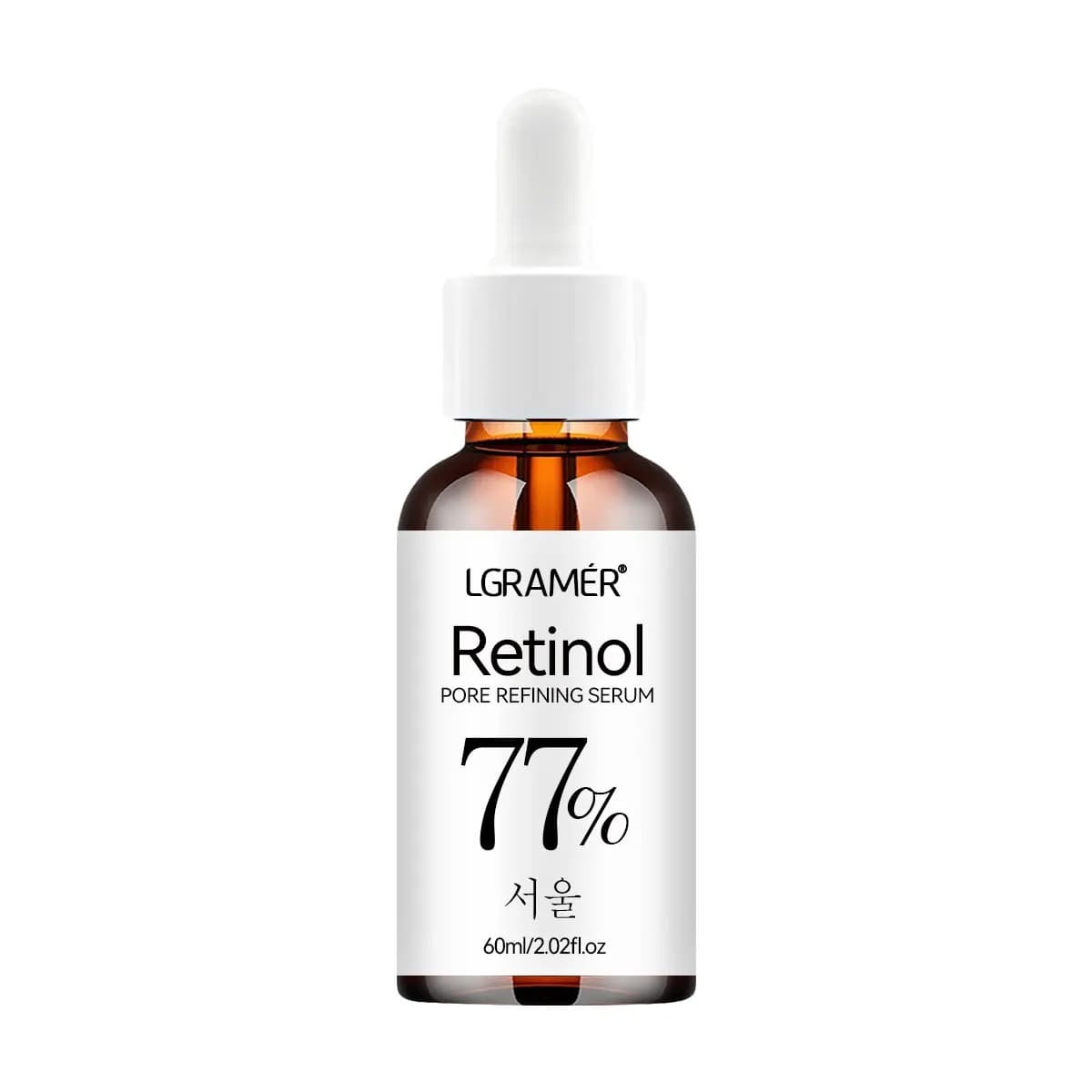
Retinol is the one skincare ingredient with decades of evidence behind it, for acne, dark marks and fine lines. It is also the one people abandon in week two because their face peeled. Both things are true, and the second one is avoidable.
What it does
Retinol speeds up skin turnover and boosts collagen. New skin comes up faster, so marks fade and texture smooths. Pores clear because dead cells stop clogging them. The price is an adjustment period, where the skin gets flaky and sensitive while it learns the new pace.
How to start without the peeling
- Low strength. 0.2 to 0.5% retinol, or a retinal or retinyl serum labelled for beginners. Our retinol face serum is a beginner strength.
- Twice a week for the first month, at night only, on dry skin, a pea-sized amount for the whole face. Then three times a week. Nightly only after two months if your skin is calm.
- Sandwich it. Moisturiser, then retinol, then moisturiser again. It slows the absorption just enough to prevent the burn.
- Avoid the eyes, nostrils and lip corners, where the skin is thin and it stings.
The sun rule
Retinol makes new skin, and new skin burns. In Kampala, at the equator, that means sunscreen every single morning, SPF 30 or higher, or you will trade fine lines for dark patches. If you cannot commit to daily sunscreen, do not start retinol.
What not to use with it
Not on the same night: vitamin C, glycolic or salicylic acids, or scrubs. Alternate nights, or vitamin C in the morning and retinol at night. Never on skin that is sunburnt, freshly waxed or threaded.
Pregnancy
Stop retinol if you are pregnant, trying, or breastfeeding. Use niacinamide and azelaic acid instead; both are safe and do part of the same job.
Timeline
Weeks 1 to 4: adjustment, some flaking. Weeks 4 to 8: clearer skin, fewer breakouts. Three months: texture and marks noticeably better. Six months: the results people post about. Retinol rewards patience and punishes enthusiasm, so start slow. The skincare range is delivered across Uganda in a plain parcel.